To succeed in the e-commerce world, businesses need a reliable technical bridge between their website and financial institutions. This bridge is called a Payment Gateway. In this article, we will explore the working principles of a payment gateway and how Craftgate’s Payment Orchestration Platform maximizes efficiency for merchants.
What Is a Payment Gateway?
When it comes to what is a payment gateway, the answer is a technical infrastructure that enables online businesses to integrate their partner banks’ virtual POS terminals. Essentially, the payment gateway acts as the foundational connectivity layer. While it ensures the secure transmission of data, advanced platforms use this technology as a base to offer broader capabilities known as Payment Orchestration.
When we consider an online business’s payment processes, a payment gateway acts as a bridge or gateway between the receiving business and the organization where the payment is processed, such as banks or payment/e-money institutions.

How Does a Payment Gateway Work?
After we answer the question of what is payment gateway, we will delve into the working principles of a payment gateway.
Several key players are involved in the online payment process. These parties collaborate to confirm and complete payment transactions after clicking the “Pay Now” button on a payment page. Before we explore the principles of how a payment gateway works, let’s briefly introduce the parties involved in the payment process:
- Merchant: These are businesses that receive payment online.
- Customer: Customers are individuals or companies that initiate payment processes on the merchant’s website (e.g., end-users for B2C models or companies for B2B models).
- Issuing Bank or Institution: This is the bank or institution that issued the card used by the customer during the payment process.
- Acquiring Bank or Institution: The bank or institution is connected to the virtual POS terminal where the payment will proceed.
Now, let’s briefly examine the payment process involving these parties:
After adding the desired product or service to their cart on the merchant’s website, the customer proceeds to the payment step to complete the order. After entering their credit or debit card information to make the payment, the provided data is encrypted using a particular method and transmitted to the payment gateway. The payment gateway then forwards this information to the bank or institution where the payment will occur. If the bank or institution approves this transaction, it proceeds to the authorization request stage.
In the authorization request stage, the bank or institution where the payment will take place sends the relevant information to the Interbank Card Center for card data verification. During this step, the issuing bank or institution reviews the request and either approves or declines the payment. This stage is also known as the payment acceptance phase. If the payment is approved, it proceeds; if declined, it is not authorized.
As you can see, while online payment transactions may seem complex, they are executed within seconds. The merchant and the customer can track the payment’s status—whether approved or declined—via the payment gateway. It’s important to note that there is no need to acquire a virtual POS from the payment gateway; this is not the case.
Why Should You Use a Payment Gateway?
After we explore what is payment gateway concept and how it works, we’ll discuss the advantages that online businesses can gain from using a payment gateway, whether they have one or multiple virtual POS terminals from banks or payment institutions.
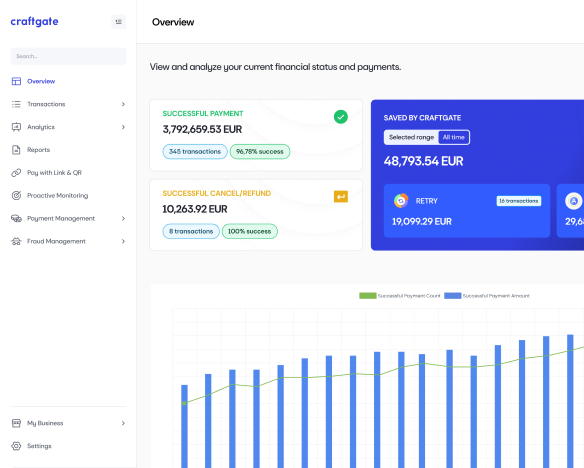
Online businesses with one or more virtual POS terminals from banks or payment institutions can benefit from using a payment gateway to manage their operational and business processes more efficiently. Payment gateway systems enable merchants to manage the payment processes of each virtual POS from a single central platform. This means companies can manage all their processes more quickly from a single source, saving them time and effort.
The specific benefits a business can obtain through a payment gateway depend on the features and capabilities of the chosen product. However, companies can save on payment expenses by using a payment gateway and benefit from value-added services such as wallets, link payments, QR code payments, payment forms, fraud management, and more.
Businesses can save time and reduce operational costs by managing their payment processes from a central platform. Additionally, depending on the payment gateway used, they can take advantage of services that can reduce payment-related expenses and contribute to their growth.
Which Businesses Is a Payment Gateway Suitable For?
Any online business that accepts payments can use a payment gateway. Whether you provide products or services to end-users or businesses, including marketplace platforms, any company that accepts online payments and has at least one virtual POS can benefit from the experience of using a payment gateway.
Why Choose Craftgate Payment Gateway?
Right after discussing what a payment gateway is, let’s look at why businesses prefer Craftgate. Craftgate provides a powerful Payment Gateway infrastructure as the foundation of its Payment Orchestration Platform. While offering seamless connectivity (gateway), Craftgate multiplies the benefit by adding an intelligence layer (orchestration) that reduces costs and increases growth.
1. Receiving Online Payment Without Being Affected by Down-times
Craftgate’s Autopilot feature allows merchants to receive payments continuously without being affected by disruptions and outages in partner banks and payment institutions.
Autopilot monitors the working status of banks and payment service providers in real-time. In the event of any disruption to a virtual POS, it is temporarily disabled, and payments are redirected to another virtual POS that is advantageous for the merchant. The disabled POS is reactivated once it resumes regular operation. This feature ensures that merchants can continue to collect payments even if partner banks and payment institutions experience disruptions, mitigating potential revenue loss.
2. Reducing Payment-Related Costs
Leveraging the orchestration capabilities built upon its gateway technology, Craftgate enables merchants to use the Smart and Dynamic Routing feature. This allows transactions to be routed to the virtual POS with the lowest commission rate, significantly reducing expenses.
3. Increase in Payment Conversion Rate
Craftgate continuously works to enable payment processing and increase payment conversion rates for merchants.
The Payment Retry feature ensures that if a payment fails on the initial POS, it is automatically retried through the next most advantageous virtual POS (e.g., the one with the second-lowest commission rate).
In addition to Payment Retry, Craftgate’s Autopilot and Smart Routing services assist merchant members in improving their payment success rates while maintaining cost efficiency.
4. Enhanced Customer Satisfaction by Providing a Frictionless Payment Experience
Merchants provide their customers with a frictionless payment experience using Craftgate’s services. By combining gateway connectivity with orchestration intelligence, Craftgate ensures uninterrupted payment processing even during bank outages.
Furthermore, Craftgate allows merchants to integrate international payment service providers easily, accept payments in multiple currencies, and offer their customers international and alternative payment options, gaining a competitive advantage.
Additionally, merchants can use Craftgate’s payment-enhancing services to reduce cart abandonment rates, thus improving both payment success and customer satisfaction.
5. 24/7 Fast and Effective Technical Support
Craftgate’s expert software team assists merchants at every step during the integration process to ensure they can easily integrate Craftgate into their systems. The Craftgate panel is designed to be user-friendly and practical, making it easy for merchant members to use. In addition to this, the software team that develops Craftgate is ready to provide 24/7 technical support whenever merchant members need it.
How to Get Started: Craftgate Payment Gateway
To easily integrate the Craftgate platform (and its gateway capabilities) into your business’s system, Craftgate’s expert software and integration team is available to support you from day one. They will provide all the information you need to use Craftgate and assist you until you are comfortable using the Craftgate Panel effectively.
Get Started with Craftgate Using a Single Integration!
After integrating Craftgate into your system, you can easily add the virtual POS terminals you have agreed upon to your Craftgate Panel with a single click. This integration is not a commercial agreement but a technical one. Craftgate allows you to manage payment processes by adding your virtual POS terminals to the Craftgate Panel with a single click without having to deal with a separate technical integration. This saves you time and provides operational convenience. Additionally, you can add virtual POS terminals obtained through commercial agreements to Craftgate Panel at any time after you start using Craftgate.
In this article, we answered what is payment gateway in detail. For more detailed information about Craftgate Payment Gateway’s other value-added services and integration processes, please contact us.